What paintless dent repair is
PDR restores suitable dents by gradually moving damaged metal toward its original form without sanding, body filler, or repainting. The technician reads the panel through reflected light, identifies the low area and surrounding tension, and makes controlled adjustments. The work is progressive: many small, deliberate movements are used instead of one forceful push.
Because the existing finish stays in place when conditions allow, PDR can preserve the vehicle’s original paint system. That avoids color matching and refinishing on a repairable panel. The method still has limits, and preserving paint is appropriate only when the finish remains sound enough for the metal to be worked safely.
How Paintless Dent Repair Technicians See Panel Damage
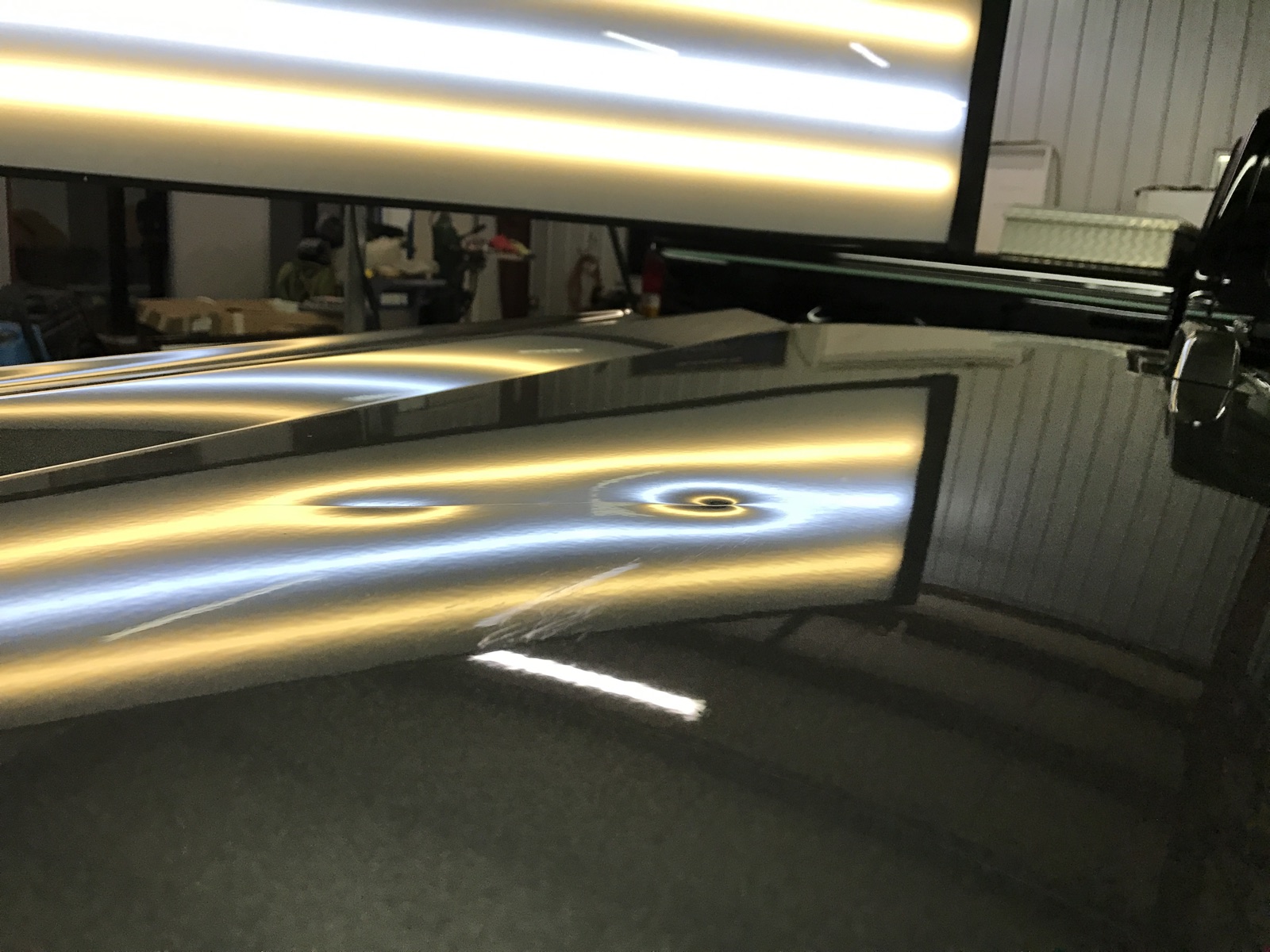
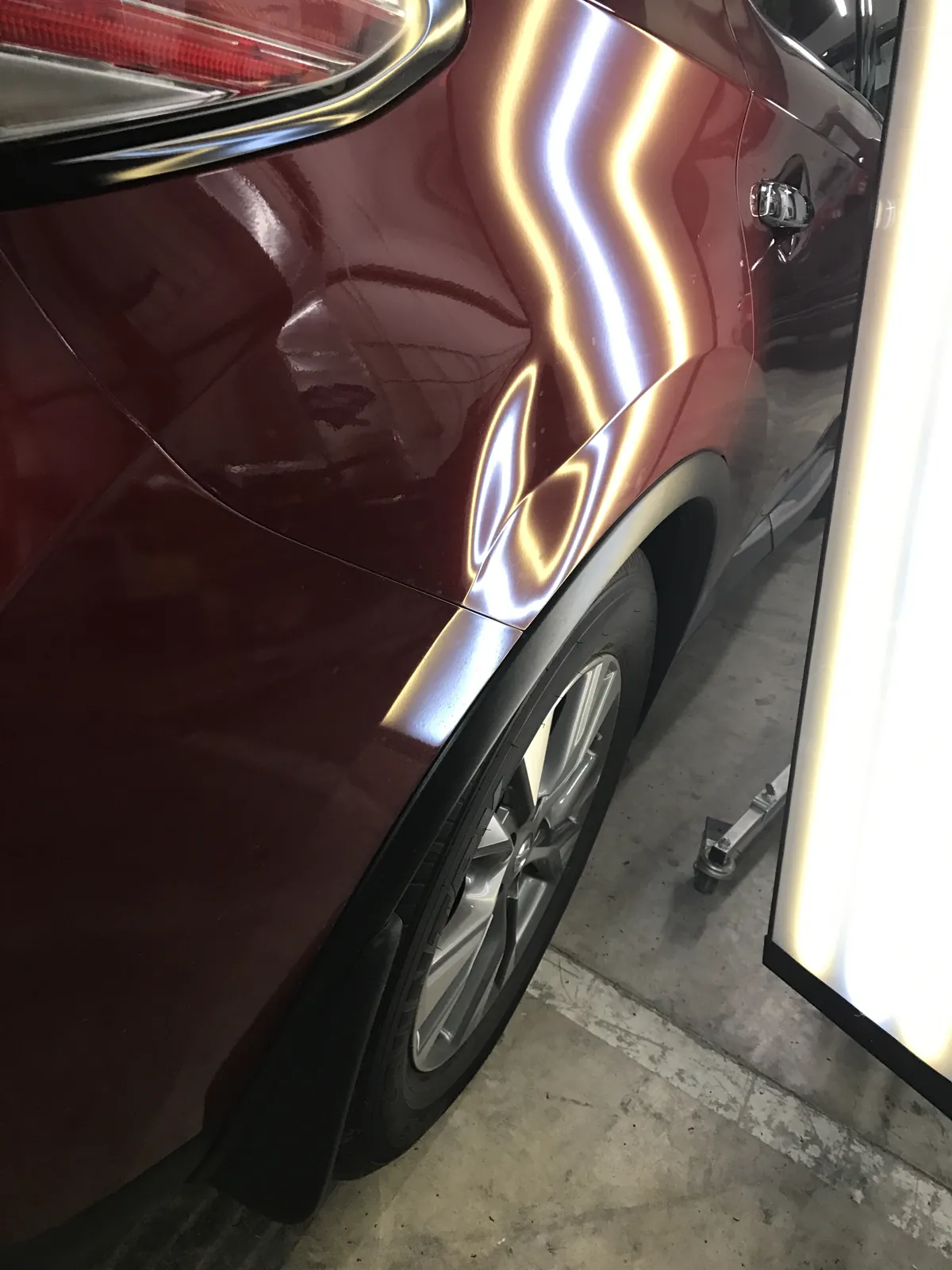
Paintless dent repair relies on controlled visibility, not guesswork. A specialized reflection light casts straight reference lines across the vehicle finish. Where a panel is low, high, crowned, or uneven, those lines bend, making subtle distortion easier to read than it would be under ordinary lighting.
An experienced technician monitors those reflections while making small, controlled adjustments to suitable damaged metal. Peak Country uses professional PDR lighting and specialized tools to evaluate and repair suitable hail damage, door dings, creases, and minor dents throughout Greeley, Weld County, and nearby Northern Colorado communities. When the paint and metal are suitable, the process can preserve the factory finish; a direct inspection is still required to determine repairability.
Learn how hail damage is evaluated · Review Repair Evaluation
Have a dent or hail damage you are unsure can be repaired with PDR?
Get Started →Why technician judgment matters
Owning PDR tools is not the same as having extensive repair experience. The tools create pressure or pull; they do not decide where, when, or how much movement is appropriate. A technician must interpret reflected lines, metal tension, crowns, panel movement, finish condition, and the effect of every adjustment.
Experience also shapes restraint. Sometimes the correct decision is to change the access strategy, stop before the finish is placed at risk, or recommend conventional body repair. Peak Country’s 20+ years of hands-on Paintless Dent Repair experience supports those practical decisions and realistic conversations about what a panel can achieve.
Push and glue-pull techniques
With a push technique, a technician uses specialized tools to reach behind the panel and apply carefully placed pressure. Tool choice and access angle vary with panel construction, bracing, dent shape, and nearby components. The objective is to manage the metal in small steps while monitoring the surface under reflection lighting.
Glue pulling works from the exterior when suitable access from behind is limited or when the dent plan benefits from controlled outward movement. A removable tab is attached with repair-specific adhesive and used to make measured pulls. Glue pulling is not appropriate for every finish, especially where paint integrity or previous refinishing is uncertain. Technicians may combine methods as the metal responds.
Dents that may be suitable for PDR
Common candidates include many hail dents, parking-lot door dings, dents, creases, and body-line damage. Larger or more complex damage can also be repairable when the full combination of severity, stretch, paint condition, material, construction, access, and customer goals supports that approach. There is no rigid maximum dent-size rule.
Steel and aluminum panels can both be repaired with PDR in appropriate cases, but they do not behave identically. High-strength steel, ultra-high-strength steel, aluminum, and other specialized materials require an appropriate evaluation. Material type is part of the decision, not an automatic reason to approve or reject PDR.
Damage that may not qualify
Cracked, chipped, or otherwise damaged paint can prevent a paintless result because moving the metal does not restore the coating. Excessively stretched metal may no longer hold its original contour reliably. Very sharp impacts, severe creases, damage at certain panel edges, and collision-related distortion can also require conventional repair.
Access limitations matter. Bracing, closed structural areas, laminated components, glass, wiring, and safety systems may block a useful tool path. Previous body filler or refinishing can change how the surface reacts, particularly with glue-pull methods. An inspection identifies these constraints before a recommendation is made.
Repair evaluation: full repair or improvement repair
PDR should be recommended because it is technically appropriate—not merely because metal can physically be moved. A full repair and an improvement repair are different goals. When an improvement repair is appropriate, the expected result and meaningful limitations should be clear before authorization.
Paint condition, vehicle age, previous repairs or refinishing, and the hidden condition of a panel can increase uncertainty and risk. Safety, structural integrity, sensor locations, and relevant OEM restrictions take priority over cosmetic convenience. If PDR is not the right choice, Peak Country will say so and may recommend a conventional, replacement, hybrid, or another qualified repair-facility path.
What to expect from a PDR inspection
Peak Country reviews the dent under controlled reflection lighting and considers its depth, location, body-line involvement, paint condition, panel material, and access. The surrounding panel is checked for crowns, prior damage, and evidence of previous repair. Photos can help with initial scheduling, but a final repairability decision requires a direct view of the vehicle.
After assessment, the proposed approach and known limitations can be explained in plain language. Mobile service is available by appointment in Greeley, Weld County, and nearby Northern Colorado communities. The working location must provide safe, suitable conditions for inspection and repair.