Reading hail damage
What automotive hail damage can look like
Automotive hail damage rarely appears as one uniform group of dents. A hood may show broad, shallow impressions while the roof has sharper impacts. Fender and door damage can be harder to see because reflections change across curved panels. Quarter-panel dents may sit near body lines or areas with limited access behind the metal. Moldings, roof rails, trim, lights, and glass also need attention during a complete inspection.
Dent count is only part of the picture. Depth, diameter, location, panel material, paint condition, and metal stretch all influence repairability. A shallow dent in open steel may respond differently from a deep impact on a reinforced body line. Cracked paint or metal stretched beyond its workable range can change the recommended repair method.
Controlled visibility
Why a controlled hail evaluation matters
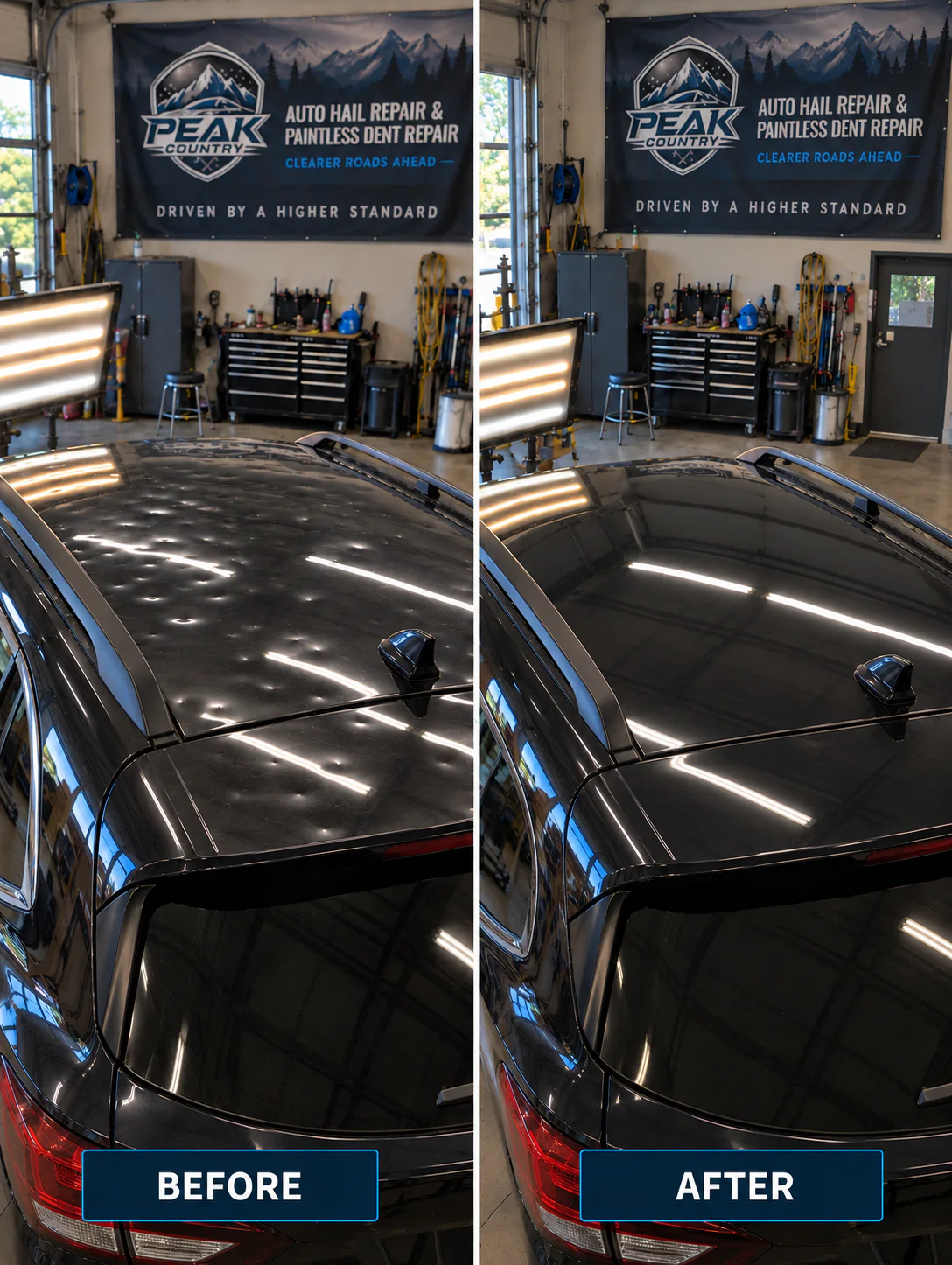
Purpose-built reflection lighting makes subtle changes in a panel easier to read. The reflected lines reveal low spots, crowns, waves, and distortion that ordinary garage or outdoor light can hide. A clean, dry vehicle and a controlled indoor environment make a more complete hail assessment possible; hail repairs generally benefit from those conditions.
The inspection separates visible hail dents from unrelated scratches, chips, prior bodywork, and everyday door dings. Moving the light and viewing each panel from several angles helps establish dent count, severity, and pattern. Photographs can begin a conversation, but they often miss shallow damage and cannot show access behind the panel.
The right repair method
PDR repairability and conventional body repair
Paintless dent repair gradually reshapes suitable metal while preserving the existing finish. It is often considered when the paint remains intact, the metal has not stretched excessively, and the technician can reach or safely work the damaged area. Retaining original factory paint may be desirable because it avoids sanding, filler, color matching, and refinishing on panels that can be repaired without those steps.
PDR is not appropriate for every impact. Cracked paint, severe stretching, sharp damage at certain edges, inaccessible construction, or previous repairs may call for conventional repair, panel replacement, or a hybrid plan. Peak Country does not currently perform conventional body repair or panel replacement in house. The recommendation should follow the vehicle’s condition rather than a blanket promise.
Careful vehicle access
Access, disassembly, and proper reassembly
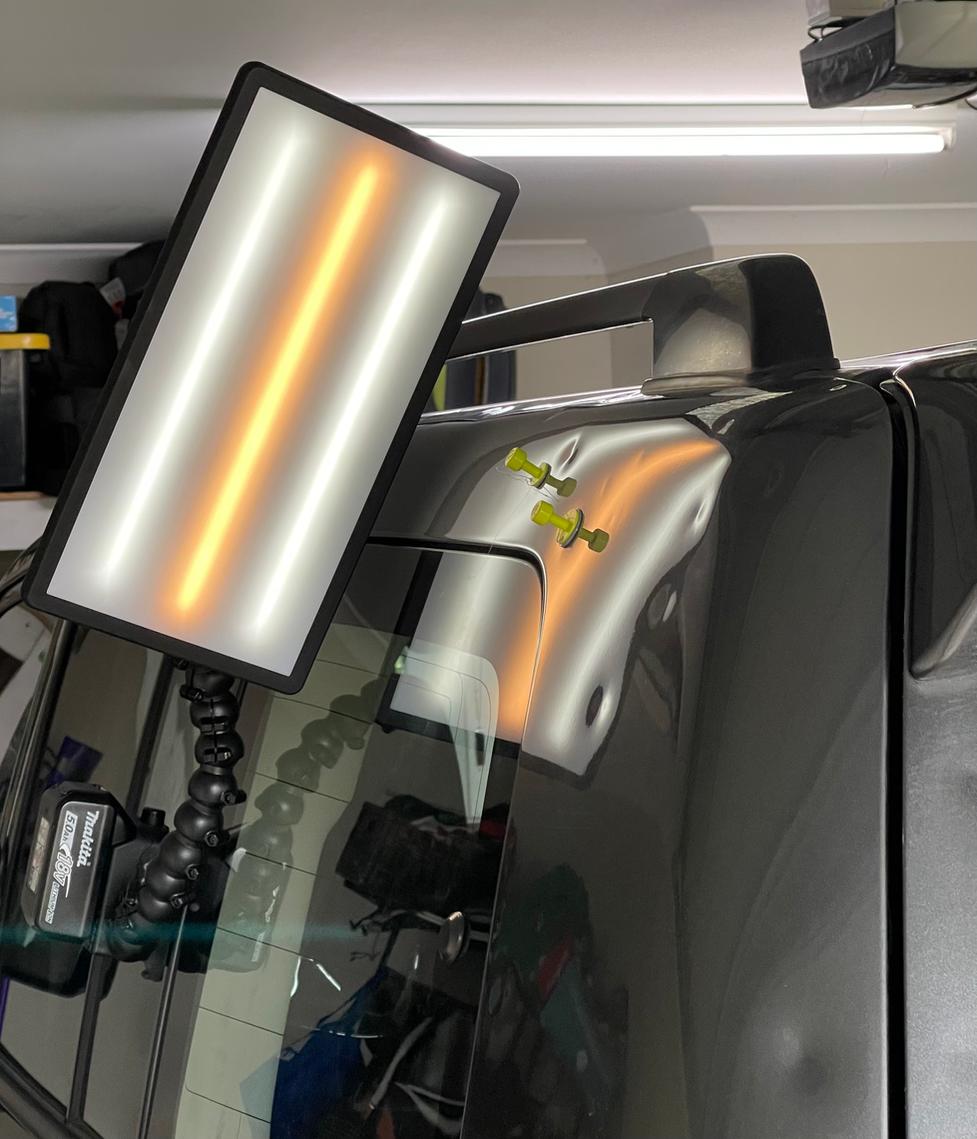
Repairing roof or door damage may require careful removal of approved trim or interior components to reach the back of a panel. Hood and deck-lid repairs can involve bracing that limits tool paths. The plan must account for wiring, airbags, glass, seals, clips, fasteners, headliners, and finished surfaces near the work area.
Removal should have a clear purpose, and reassembly is part of the repair. Components need to return to their correct position with their connections, fit, and function checked. Peak Country discusses relevant access considerations and realistic limitations before work moves forward.
A documented repair plan
Documentation, insurance context, and repair economics
Insurance use does not change the workmanship standard. Whether a customer pays directly or uses insurance, the repair recommendation should be based on the vehicle’s condition, the appropriate method, and the agreed repair goal. Coverage, deductibles, authorization, and payment decisions remain controlled by the policy and insurer.
Complex hail or insurance-related work may require professional estimating and documentation: detailed panel inspection, repair planning, required R&I, photographs, technical information, and supported revisions when authorized access reveals additional needs. Repair economics can also affect whether PDR, a hybrid plan, conventional repair, or replacement makes more sense for a particular panel. Peak Country explains the appropriate next step before any paid documentation service is performed.
Start with the vehicle
What happens during a Peak Country hail inspection
The inspection starts with the vehicle’s year, make, model, storm context, location, and any concerns you have noticed. Under appropriate lighting, the visible exterior panels are reviewed for dent patterns, paint damage, prior repairs, access constraints, and other conditions that could affect the approach. Peak Country then explains which areas appear suitable for PDR, which may need another method, and what additional access may be necessary.
Weather data can help establish regional context, but a nearby NOAA or Storm Prediction Center report does not prove that a specific vehicle was struck. Reports describe observations at a place and time, with varying coverage and precision. The vehicle itself must be inspected before damage or repairability is determined.