
Door dings and everyday dents are not all alike
A neighboring door can leave a small round low spot, a sharp impact, a paint transfer mark, or a crease. Shopping carts, garage objects, sports equipment, and minor bumps create different shapes even when the damaged area appears similar at first glance. Curved reflections can also conceal crowns or a wider area of movement around the center.
The affected panel matters. A dent in the open center of a door presents different access from damage near an edge, handle, intrusion beam, or folded seam. Minor dents on fenders and quarter panels may sit against liners, braces, trim, or enclosed construction. Peak Country reads the panel under inspection lighting before deciding how it should be approached.
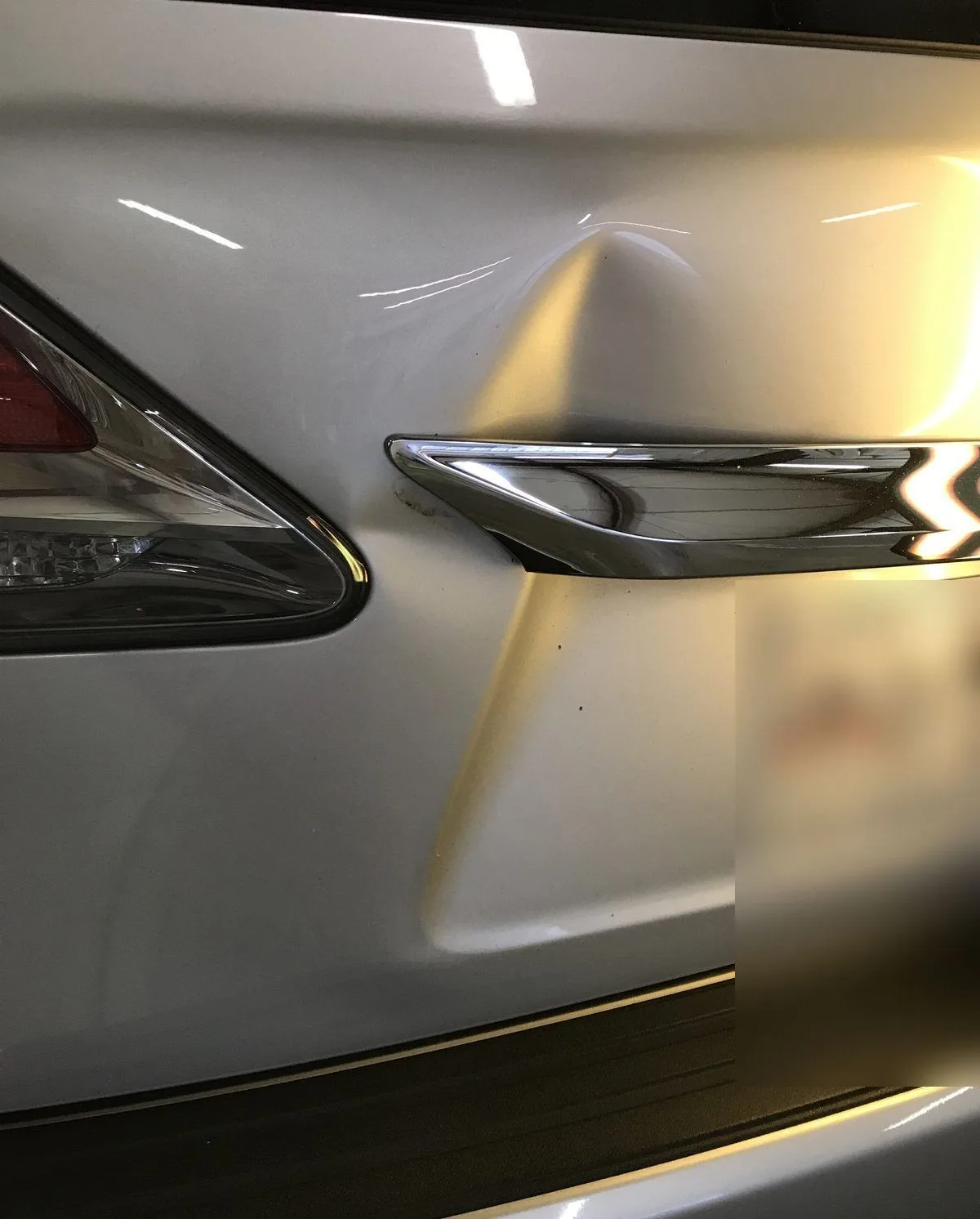
Location, depth, paint, and access
A broad shallow ding with intact paint may be a good PDR candidate. A smaller but deeper impact can have more metal stretch and a sharper center. Dents on body lines require additional judgment because those styled contours are formed with tension. Minor creases vary by length and sharpness; a soft crease can behave very differently from one with a pinched center.
Paint condition is equally important. PDR reshapes metal but does not replace missing paint or repair a crack in the finish. Previous refinishing or body filler may affect tool choice and can make exterior glue pulling unsuitable. Access behind the damage, panel material, nearby wiring, glass, bracing, and trim all influence the repair plan.
When paintless dent repair makes sense
PDR often makes sense when the paint is intact, the metal remains workable, and the technician has a safe way to control the damaged area. Suitable parking-lot dings, minor dents, body-line dents, and some creases can often be improved without sanding, filler, or repainting. Keeping the existing finish avoids color matching on a panel that can be repaired paintlessly.
The repair may use controlled pressure from behind the panel, exterior glue-pull techniques, or a planned combination. Each method moves the metal gradually while the technician monitors the reflection. The choice follows the panel and finish rather than the apparent size of the dent alone.
When conventional repair may be more appropriate
Conventional body repair may be the better choice when paint is cracked, the metal is severely stretched, collision damage has distorted the panel, or the dent sits where safe and effective access is not available. Very sharp creases, torn metal, damaged edges, or extensive previous bodywork can also change the recommendation.
A responsible assessment includes saying when PDR is unlikely to produce a sound result. In some cases, a conventional shop can repair and refinish the panel; in others, replacement may be considered. Peak Country explains visible limitations and does not treat every dent as a paintless repair.
A careful door ding inspection
The inspection begins with the location and cause of the damage, if known. Reflection lighting helps reveal the true low area, surrounding crowns, body-line movement, and surface texture. The paint and panel are checked for chips, cracks, previous work, and material differences. Access points and any components that may require approved removal are considered before the repair is scheduled.
Photos are helpful for identifying the panel and general shape, but they can flatten reflections and hide depth. A direct inspection gives a more realistic basis for discussing expected improvement, access, and whether PDR is appropriate. Peak Country provides mobile inspections and repair by appointment in Greeley, Weld County, and nearby Northern Colorado communities.
Door dings alongside hail damage
Everyday dents may be found while a vehicle is being inspected after a storm. They should be identified separately from the hail pattern so the scope remains clear. A nearby hail report does not establish the cause of a particular dent, and unrelated damage should not be represented as storm damage.
If you are researching a recent storm, the regional tracker can provide sourced weather context. The actual vehicle inspection determines what damage is present and which dents may be repairable.